
Last updated November 4, 2026
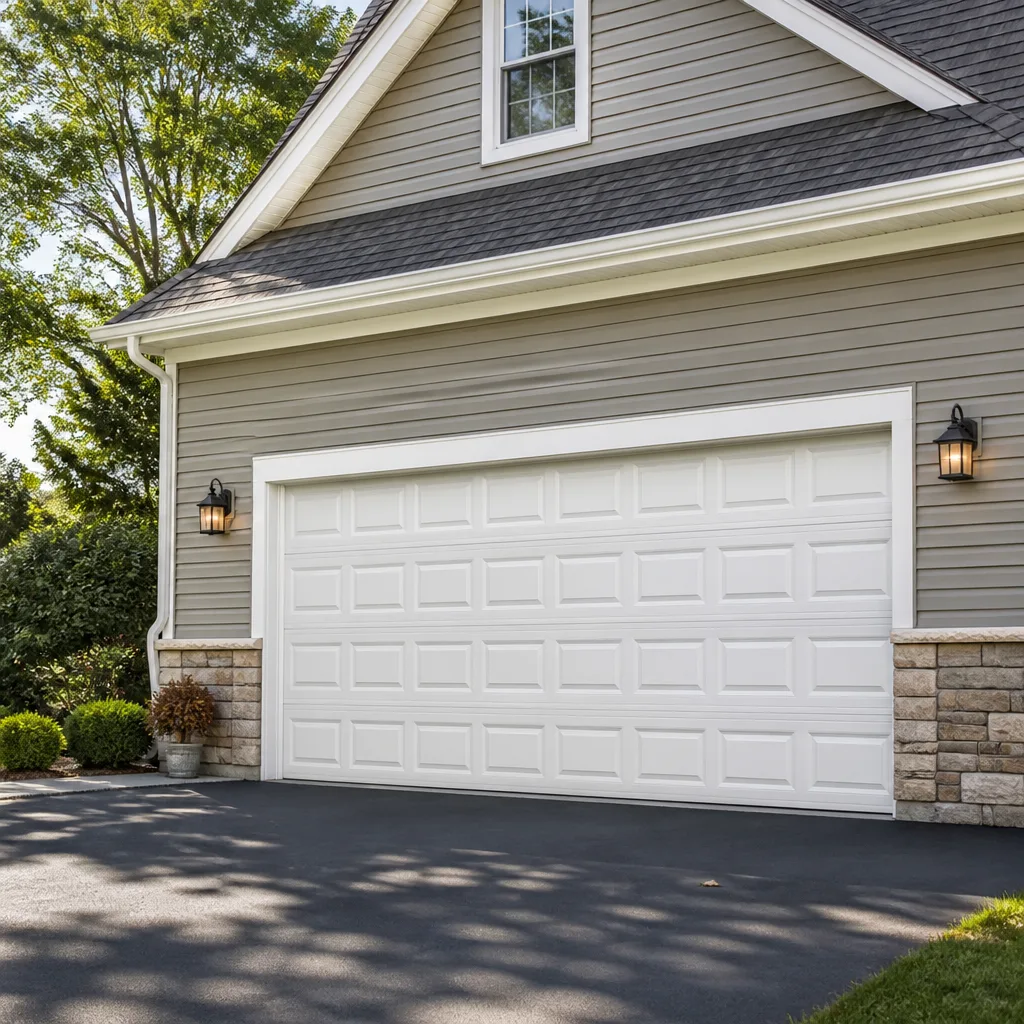 Raised-panel steel
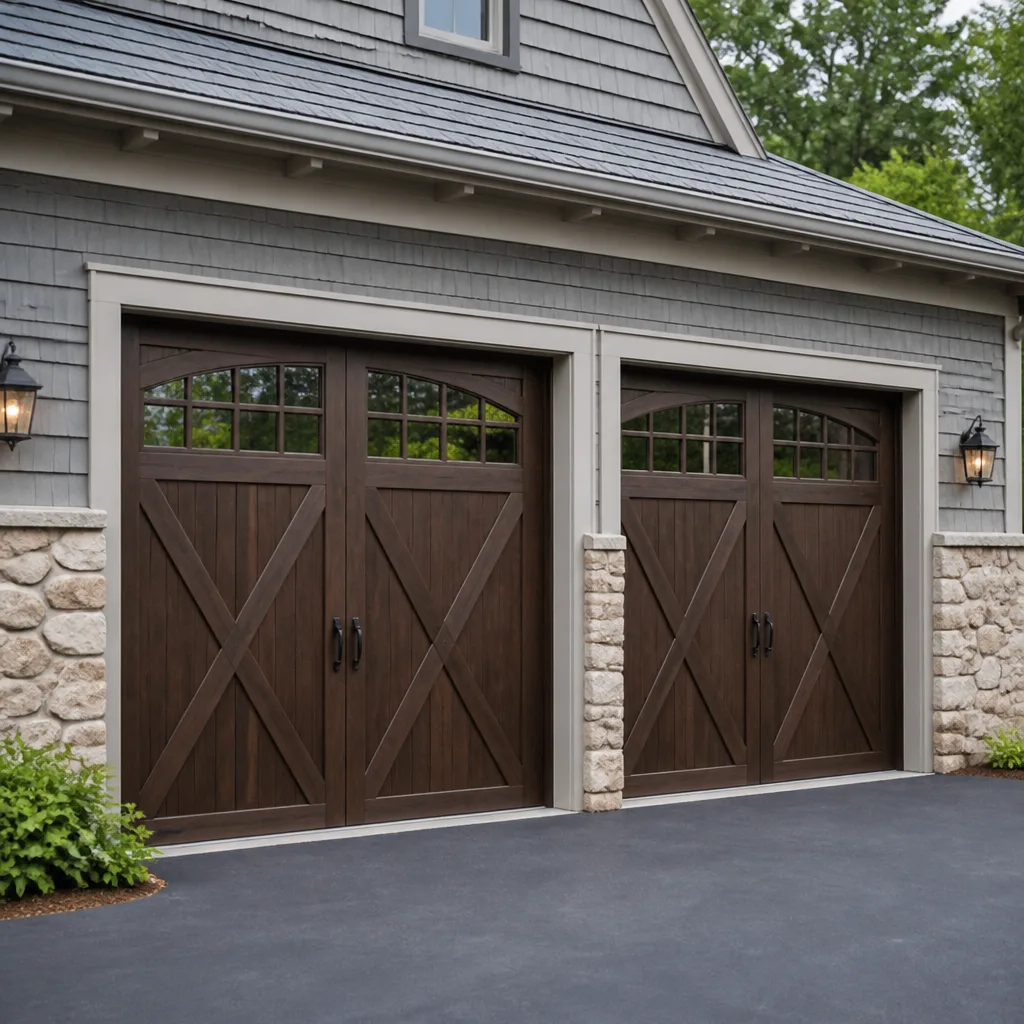 Carriage house
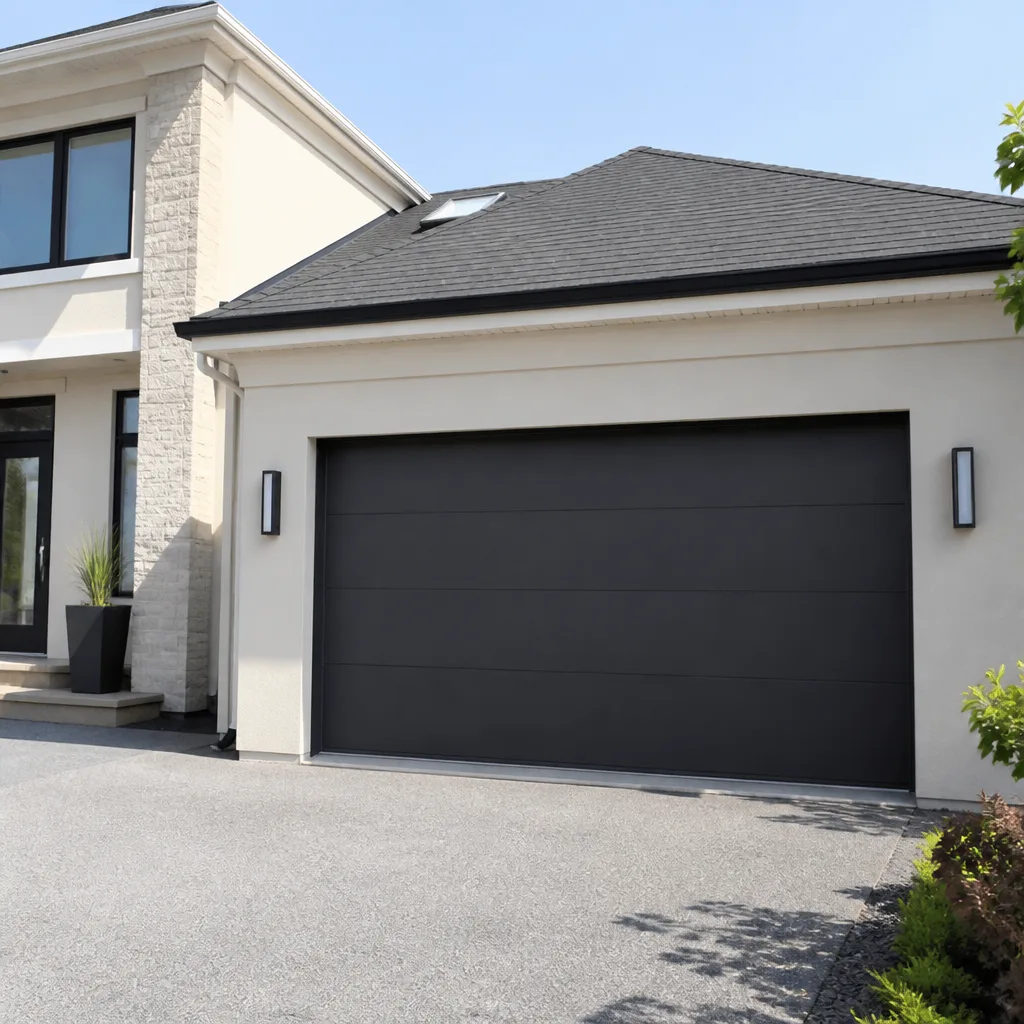 Modern flush
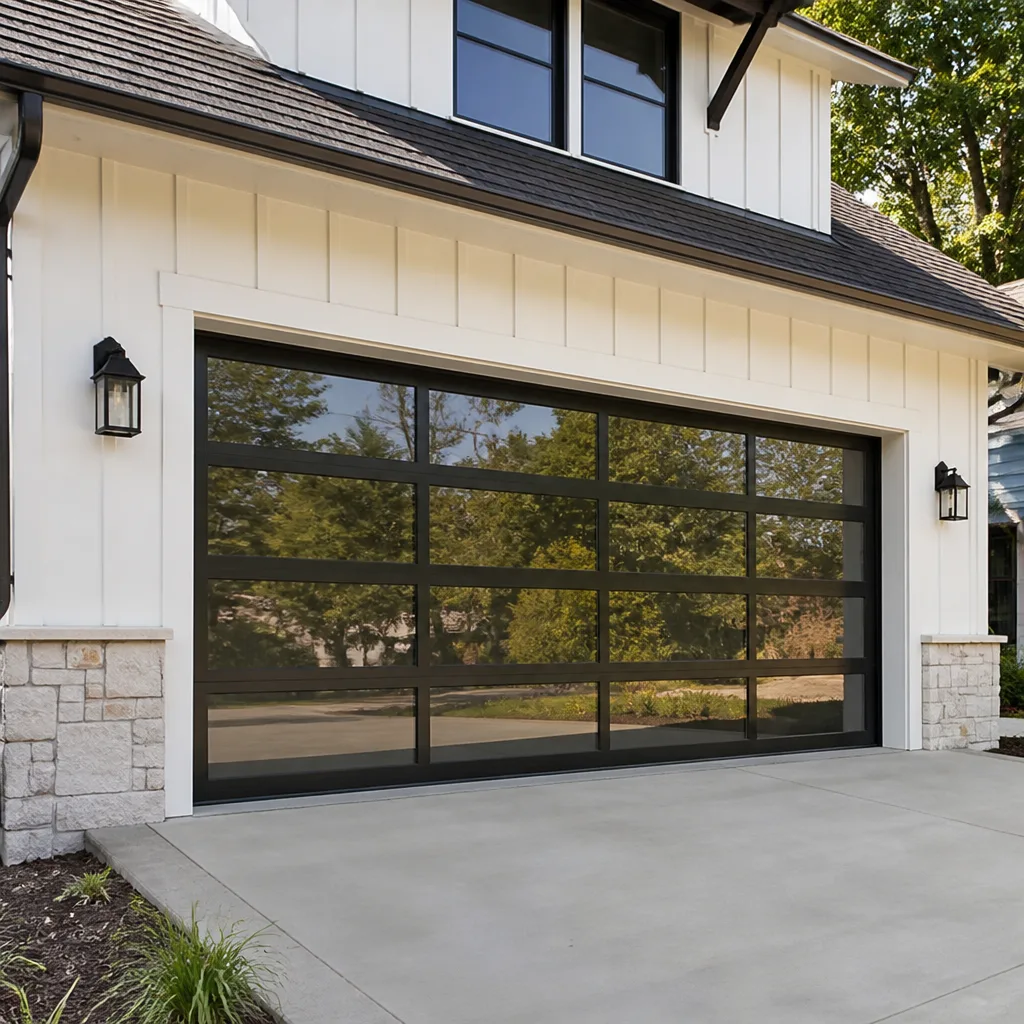 Full-view glass
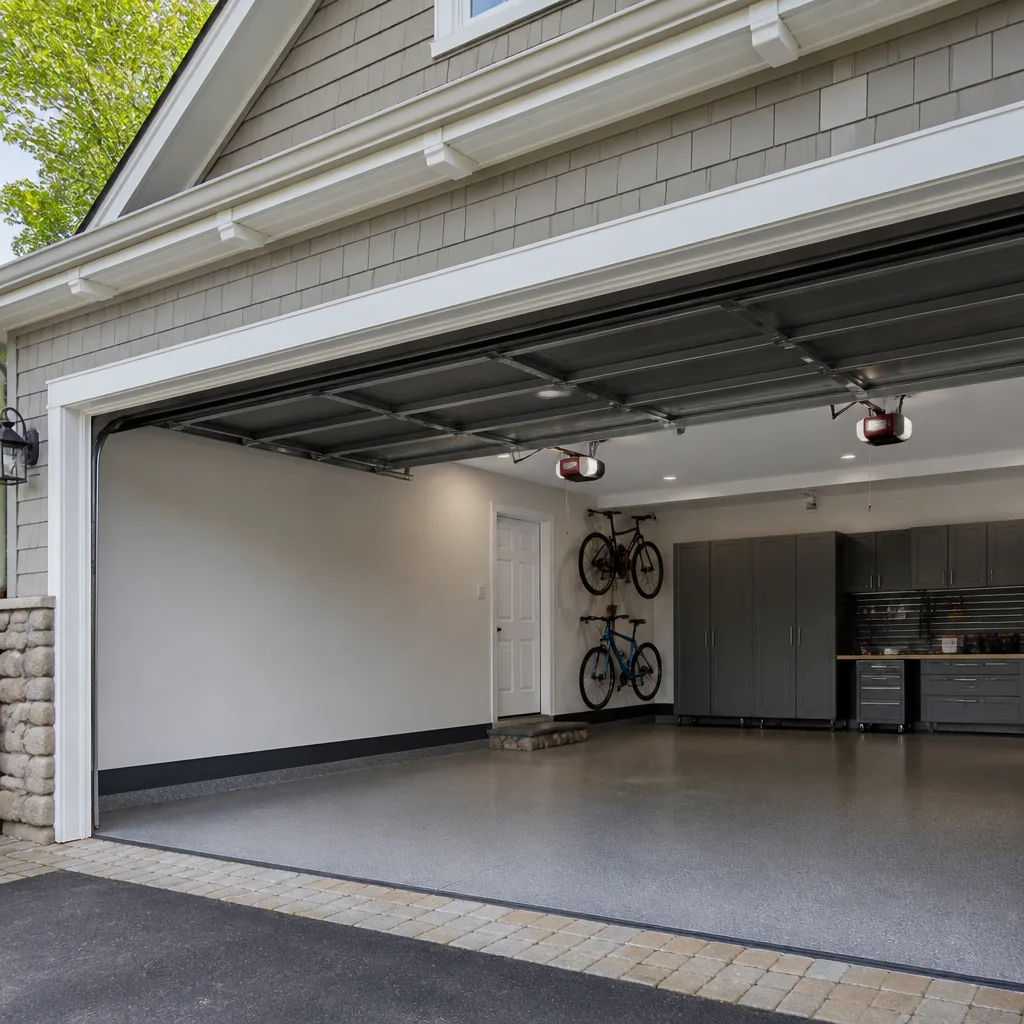 LiftMaster openers
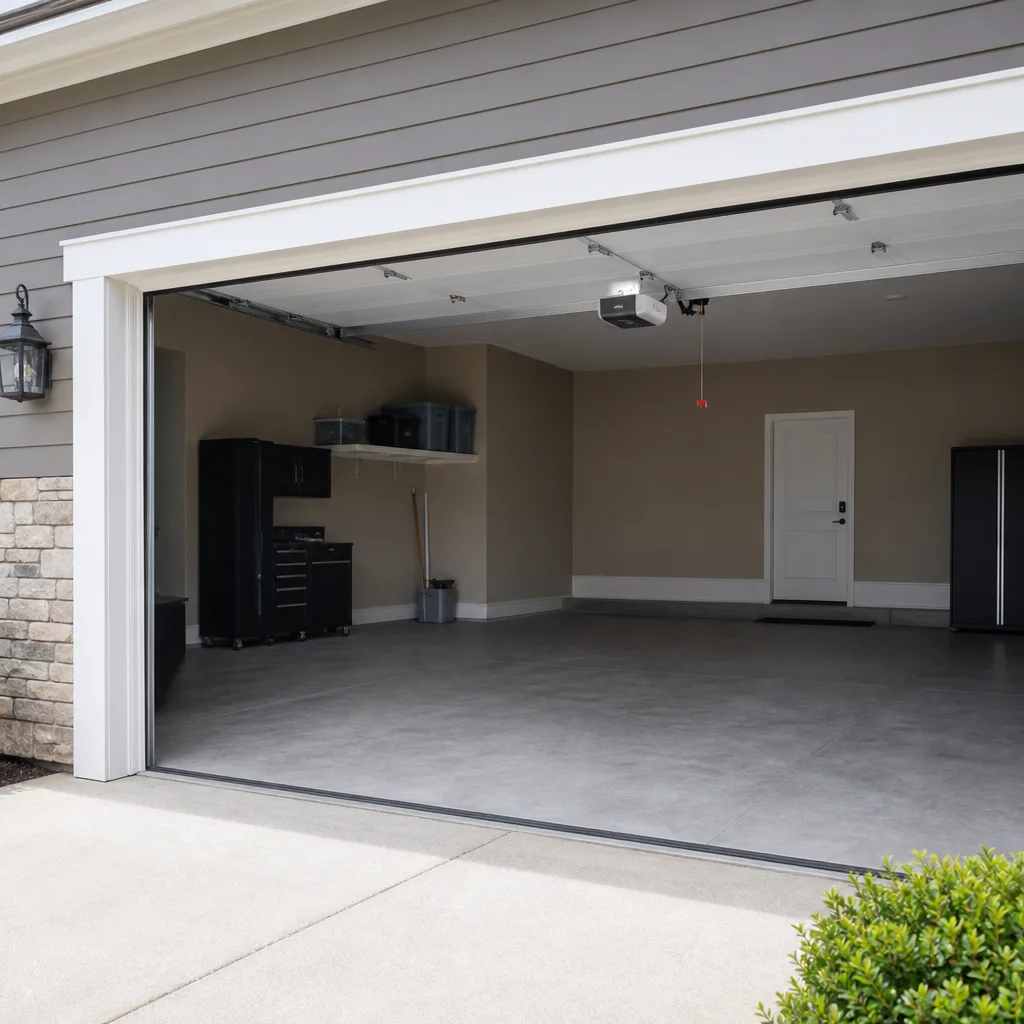 Chamberlain openers
Full 25-point door and opener safety check with every visit - springs, cables, rollers, tracks, and your LiftMaster or Chamberlain opener included
You get a price before we start. It does not change when the truck arrives.
Get your free estimateThe Complete Guide to Garage Doors in Monterey Park
Most homeowners can name their HVAC brand and their roofing material, but fewer than one in ten know what type of spring system their garage door runs. That single gap in knowledge is responsible for the majority of emergency service calls we see across Monterey Park. A garage door is not one piece of equipment. It’s a system of interdependent parts, and when one layer fails, the others take on stress they were never designed to carry. This guide maps the entire system, from the door panels you see to the springs and opener you rarely think about, so you can own your door instead of being surprised by it.
Quick Answer
A garage door in Monterey Park is a three-layer system: the door assembly, the spring and hardware mechanism, and the motorized opener. Most failures trace back to one of these layers, and fixing only the symptom while ignoring the underlying cause is what creates repeat service calls. Understanding how each layer works, what your specific home requires, and when a part is nearing the end of its service life is the difference between a minor repair and a cascade of failures.
Styles & brands we work with
- Raised-panel steel
- Carriage house
- Modern flush
- Full-view glass
- LiftMaster openers
- Chamberlain openers
Table of Contents
- The Three-Layer Anatomy of a Garage Door System
- What Monterey Park’s Housing Stock Means for Your Door
- Spring Systems: Torsion vs. Extension
- Openers and the Smart Home Shift
- Seismic Retrofitting and Garage Door Framing
- Brand Ecosystems: What’s Already in Your Garage
- Full-System Diagnosis vs. Single-Part Swaps
The Three-Layer Anatomy of a Garage Door System
We tell homeowners in Monterey Park to think of their garage door as three separate components that happen to work together. When one layer fails, the other two feel the effect within weeks or months. Knowing which layer you’re dealing with changes who you call, what you ask, and how much you should expect to pay.
The first layer is the door assembly itself: the panels, tracks, rollers, hinges, and weatherstripping. This is the visible, mechanical layer. Panels are typically steel, aluminum, or wood composite, and they’re built to specific widths and heights that vary by home. Tracks guide the panels, rollers reduce friction, and hinges connect everything. Weatherstripping along the bottom and sides keeps dust, leaves, and the occasional Monterey Park heat out of your garage.
The second layer is the hardware and spring mechanism. Springs do the heavy lifting, storing tension when the door closes and releasing it when the door opens. Cables are wound around drums and connected to the springs. When a spring snaps, the door becomes dangerously heavy, and the opener is suddenly working against forces it wasn’t designed to handle. This is the layer that causes the most emergency calls because it fails suddenly and loudly.
The third layer is the opener: the motorized unit mounted to the ceiling that converts electrical power into mechanical motion. The opener pulls or pushes the door along the track, and it contains a logic board, a motor, a rail system, and safety sensors. Modern openers in Monterey Park increasingly include smart-home connectivity, battery backup, and wireless keypads. When an opener fails, the door usually stays closed or stops mid-cycle, which is far less dangerous than a spring failure but no less frustrating.
Each layer requires its own maintenance logic. Panels need periodic track alignment and roller lubrication. Springs need professional tension checks. Openers need sensor alignment and occasional logic-board resets. The homeowner who treats all three as one unit is the homeowner who ends up replacing an opener because a heavy, unbalanced door wore out the motor.
What Monterey Park’s Housing Stock Means for Your Door
Monterey Park’s residential landscape is a mix of mid-century ranch homes built between the 1950s and 1970s, 1980s stucco builds, and newer infill construction on subdivided lots. That mix matters because garage door sizes, headroom clearances, and opener rail lengths differ significantly across these eras.
The mid-century ranch homes in Monterey Park’s older neighborhoods typically have garage doors that are narrower than modern standards. A 16-foot-wide double door is common in newer construction, but many ranch homes have 15-foot or even 14-foot openings. Headroom, which is the vertical space between the top of the door opening and the ceiling, runs tight in these older garages. That matters because low headroom changes which spring systems and openers work. A standard torsion spring setup needs about 12 inches of headroom. Tighter clearances require low-headroom track configurations or rear-mounted torsion systems.
The 1980s stucco builds are more standardized. Most have 16-foot double doors or 8-foot single doors with adequate headroom. These homes generally accommodate conventional torsion spring systems and belt-drive openers without modification. The garages are deeper, too, which means opener rails can run full length without clearance issues.
Newer infill construction in Monterey Park often includes taller ceilings and wider doors, sometimes 18 feet across for three-car garages. These homes frequently come with builder-grade openers that function fine for the first few years but wear out faster than mid-range units. Homeowners in these newer homes are often surprised to learn their builder-installed opener is already near the end of its service life after six or seven years of daily use.
The takeaway is that your home’s era dictates your door’s dimensions and tolerances. Before any panel or opener swap, the rough opening has to be measured precisely. A half-inch discrepancy in width or headroom changes the entire installation plan. This is where garage door repair becomes a precision job rather than a generic swap.
Spring Systems: Torsion vs. Extension
Your garage door runs on one of two spring systems, and the difference affects safety, cost, and long-term reliability. Knowing which one you have takes thirty seconds of inspection and saves you from paying for the wrong repair.
Torsion springs are mounted horizontally on a shaft above the closed door. When the door closes, the springs wind up and store tension. When the door opens, that stored tension unwinds and does most of the lifting work. Torsion springs are the modern standard for their smoother operation and safer failure mode, though the tension they hold is still lethal if mishandled. Most homes in Monterey Park built after 1980 use torsion systems.
Extension springs are mounted vertically on both sides of the door, parallel to the horizontal tracks. They stretch when the door closes and contract when it opens. You’ll find them on many mid-century ranch homes in Monterey Park, particularly those with original doors. Extension springs are less expensive than torsion springs, but they fail more abruptly and can send cables flying if a safety cable isn’t installed.
Spring failure is the most common reason homeowners call us. Here’s what you need to know:
- Springs are rated by cycle life, not years. A standard spring is rated for roughly 10,000 open-and-close cycles, which translates to about seven to nine years of normal use. Heavy use shortens that timeline.
- When one spring fails, its pair is not far behind. Most doors run on two springs, and both have been through the same number of cycles. Replacing one spring while leaving the other is a short-term savings that creates a second service call within months.
- A snapped spring makes the door dangerously heavy. Do not attempt to open the door. Disconnect the opener and leave the door in place until a trained professional arrives.
- Spring replacement involves high-tension equipment. This is not a DIY project. The winding rods, tool placement, and release procedure require specific training, and the stored energy in a wound spring is enough to cause serious injury.
If you hear a loud bang from your garage followed by a door that won’t lift, you have a broken spring. Call a professional. Do not try to force the door open manually. The Stonegate Garage Door Repair team in Monterey Park carries springs for the brands most commonly found in local homes, which means we can usually complete a spring replacement in a single visit.
Openers and the Smart Home Shift
The opener is the component that has changed most dramatically over the past decade. In Monterey Park, we see a clear split between older mechanical openers still working in original condition and newer smart-home-compatible units that homeowners are increasingly requesting during upgrades.
Older openers, particularly the chain-drive units common in homes built before 2000, are simple machines. They use a chain to pull the door along a rail. When they fail, the problem is usually mechanical: a worn gear, a stripped sprocket, or a stretched chain. These units are loud by modern standards, but they keep working for a long time if the door is balanced properly. A Craftsman or older Genie opener in a 1980s Monterey Park stucco home is a familiar sight on service calls.
Modern openers are quieter and smarter. Belt drives use a reinforced rubber belt instead of a chain, which dramatically reduces operating noise. Screw drives use a threaded rod and have fewer moving parts. The most significant shift has been toward connectivity: chamberlain and its professional line LiftMaster now dominate the smart opener market, with Wi-Fi connectivity, smartphone control, real-time status alerts, and compatibility with battery backup systems.
Here’s a structured way to think about whether your current opener is worth repairing or replacing:
- If the opener is more than 15 years old, replacement is usually more cost-effective than repeated repairs.
- If the motor runs but the door doesn’t move, the problem is usually a stripped gear or broken drive coupling, both repair-friendly.
- If the opener makes a grinding noise without moving the door, the gear and sprocket assembly has worn out.
- If the opener works intermittently, the logic board or safety sensors are the likely culprits.
- If you want smartphone control and don’t have it, a modern opener is the cleanest solution.
Our garage door opener repair service covers both legacy and modern systems. We work on LiftMaster, Chamberlain, Genie, Craftsman, and Raynor openers, which means we can diagnose what’s already in your garage without pushing an upgrade you don’t need.
Seismic Retrofitting and Garage Door Framing
Monterey Park sits in a seismically active region, and Southern California building codes reflect that reality. Garage door framing is a first line of defense in an earthquake, and understanding why matters before any panel or opener replacement.
The garage opening is typically the largest unsupported span in a residential wall. In a seismic event, the wall surrounding that opening experiences lateral force, which can rack the framing and leave the door askew or jammed. Building codes require specific shear wall reinforcement around large openings, and retrofit requirements apply to homes built before modern seismic standards were adopted. Many mid-century ranch homes in Monterey Park predate those standards and benefit from retrofit work that strengthens the wall around the garage opening.
Ask your city’s building department about local retrofit requirements before undertaking any structural work on the garage wall. For panel or opener replacements that don’t touch the framing, permits are generally not required, but structural retrofits fall under a different category. The key point is that a door that sits in a racked or weakened frame will never operate smoothly, no matter how precisely it’s installed. The frame comes first, the door second.
This is also why we measure the opening carefully before recommending a new door. A frame that has shifted even a quarter-inch out of square will bind panels and wear out rollers prematurely. If the framing needs attention, that work has to happen before the new door goes in. Few things frustrate a homeowner more than paying for a quality door that grinds and sticks because the opening itself was never addressed.
Brand Ecosystems: What’s Already in Your Garage
One of the most useful things you can do before calling anyone about your garage door is simple: look at what you already have. The brand labels on your door panels, springs, and opener tell a technician more than a phone description ever will. And in Monterey Park, certain brands show up more often than others because of the housing stock.
Wayne Dalton doors are common in newer infill construction. They use a unique TorqueMaster spring system that sits inside a tube rather than on an exposed shaft, which means homeowners who look up and don’t see typical torsion springs are often looking at a Wayne Dalton door. Raynor doors appear frequently in mid-century homes, known for their longevity and straightforward hardware. Craftsman openers are ubiquitous in homes built before 2000, typically paired with whatever door brand the original builder selected.
Here’s how to identify your equipment before you make a call:
- Check the interior door panels for a manufacturer label, usually in a corner of the bottom section or along the side edge.
- Look at the opener housing for a brand name: Chamberlain, LiftMaster, Genie, Craftsman, or Raynor are the most common in Monterey Park.
- For the spring system, look above the door for an exposed shaft with springs (torsion) or along the side tracks for vertical springs (extension).
- Note whether your opener uses a chain, belt, or screw drive, as that affects what replacement parts are available.
We work across eight major brands, including LiftMaster, Chamberlain, Genie, Clopay, Amarr, Wayne Dalton, Craftsman, and Raynor. That brand-agnostic approach means our recommendations come from what’s best for your specific setup, not from what we happen to sell. We already know your Wayne Dalton system, your Raynor panels, and your Craftsman opener. Diagnosed, not guessed.
Full-System Diagnosis vs. Single-Part Swaps
The single biggest difference between a good garage door service and a mediocre one is how the diagnosis starts. A single-part swap replaces whatever broke and leaves everything else alone. A full-system diagnosis looks at how the failed part affected everything around it.
Here’s what full-system diagnosis looks like when our team works on a door in Monterey Park:
- We inspect the door panels for warping, delamination, or damage that might be adding resistance.
- We check the track alignment on both sides, measuring with the door in motion to catch subtle binding.
- We evaluate the springs for wear, checking whether they’re near the end of their cycle life even if they haven’t broken.
- We test the opener under load, listening for changes in motor pitch that indicate strain.
- We verify that the safety sensors, force settings, and travel limits are properly adjusted.
The reason this matters is that garage door problems rarely happen in isolation. A door that has gradually come out of balance puts extra stress on the springs. Weakened springs make the opener work harder. A strained opener eventually strips its drive gear. Three separate repairs, three separate invoices, one underlying cause. Full-system diagnosis finds the cause before it becomes a cascade.
We’ve seen doors in Monterey Park where the homeowner had paid for three opener repairs in two years, only to discover the real problem was a spring that had lost tension and was forcing the opener to do twice its rated work. One call covering the whole door, not three calls patching one layer at a time.
Common Mistakes to Avoid
- Ignoring a noisy door. Grinding, popping, or squealing sounds are early warnings. A door that gets louder over time is telling you a roller is failing, a hinge is binding, or a spring is losing tension. Waiting until it stops working turns a minor fix into a major repair.
- Replacing one spring instead of both. When one spring snaps, the other has the same cycle count. Replacing a single spring saves money today and guarantees another service call soon. Both should be replaced as a matched set.
- Disconnecting the opener when the door won’t lift. If the door is heavy and won’t stay up when opened manually, the springs have failed. Forcing the door open puts you and the door at risk.
- Buying the cheapest opener online. Box-store units are often fine for light use, but Monterey Park garages that see daily cycles need a unit with the right horsepower and drive type. Undersized openers wear out fast.
- Skipping sensor alignment. Safety sensors that aren’t aligned cause the door to reverse mid-cycle or refuse to close. This is the most common non-mechanical service call we get, and it’s the easiest to prevent.
- Painting over weatherstripping. A fresh coat of paint on the door’s bottom seal looks fine for a month, then the seal cracks and loses its flex. Weatherstripping is replaceable and should be swapped periodically, particularly in Monterey Park’s dry heat.
- Assuming a new door fixes everything. A high-quality panel installed on a weak frame with old springs will perform badly. The system has to work together or not at all.
See the difference
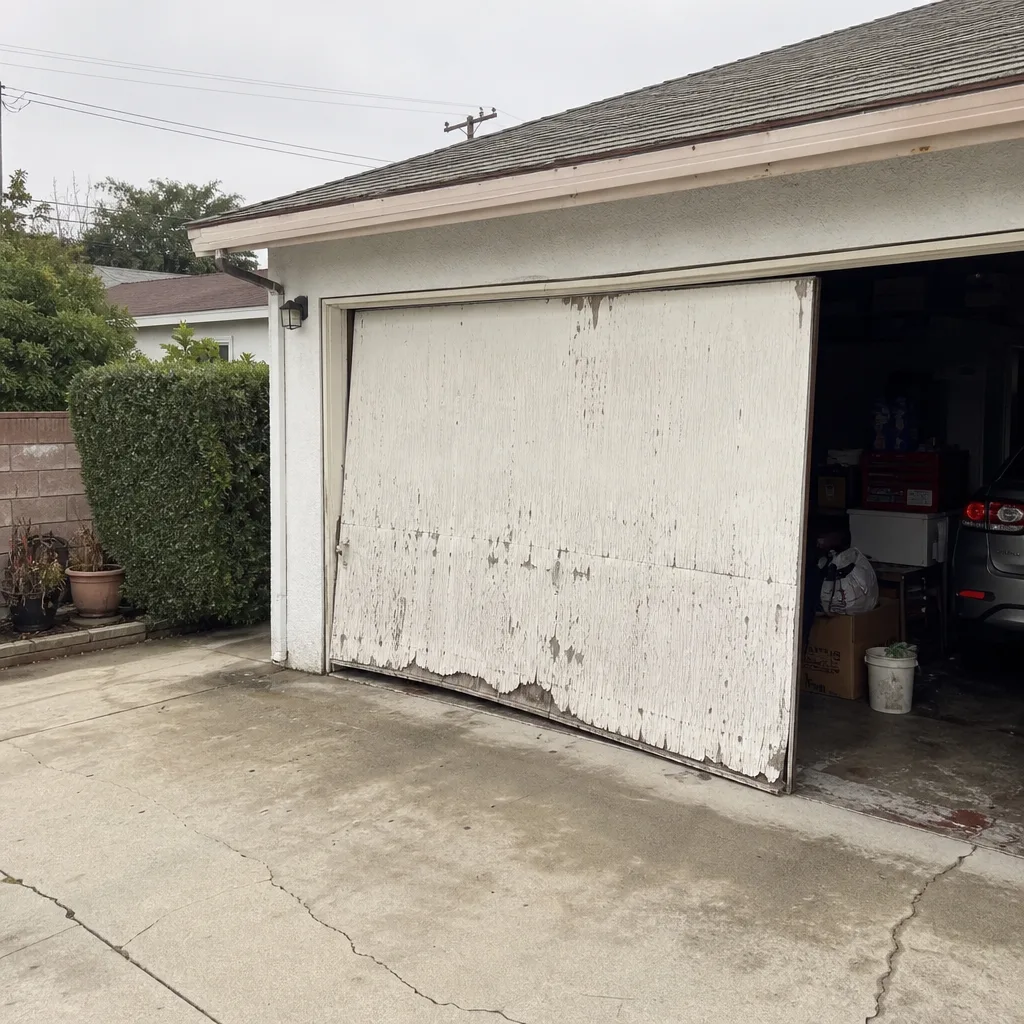 Before
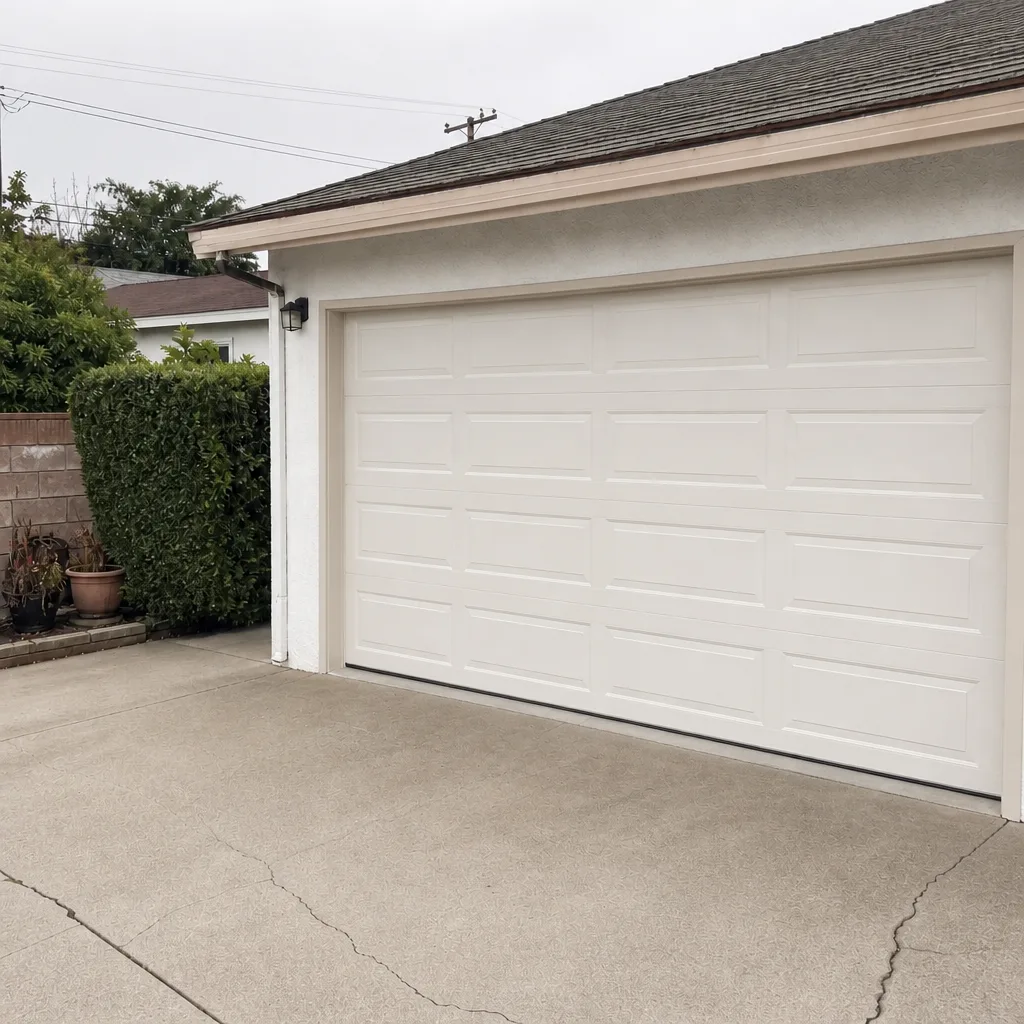 After
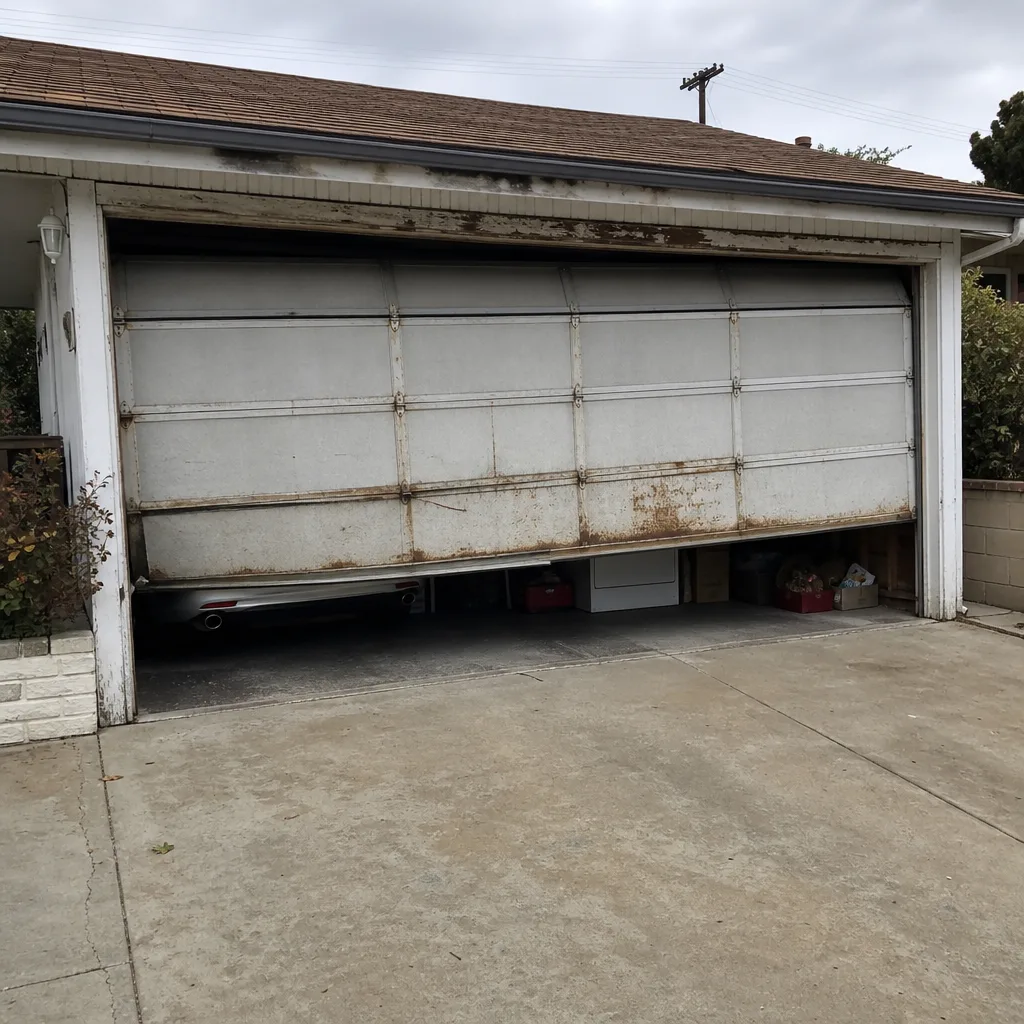 Before
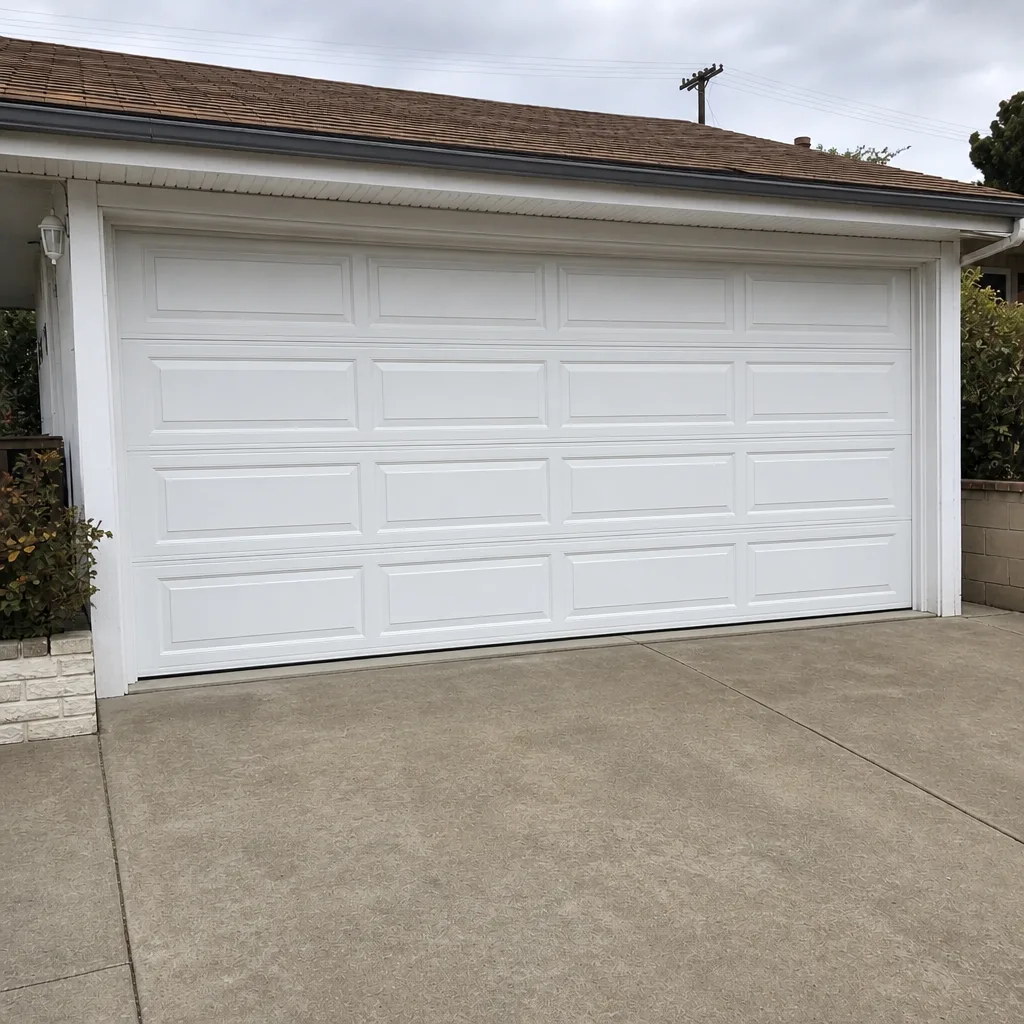 After
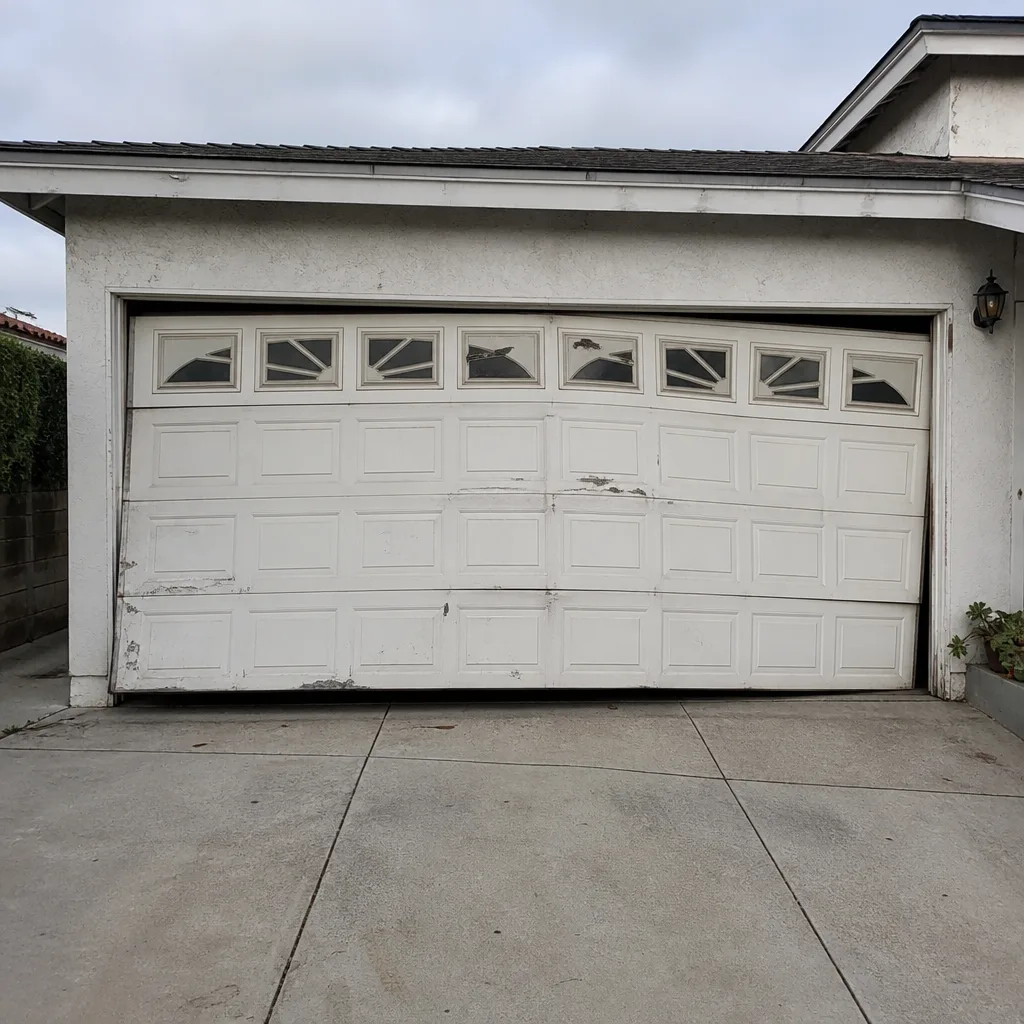 Before
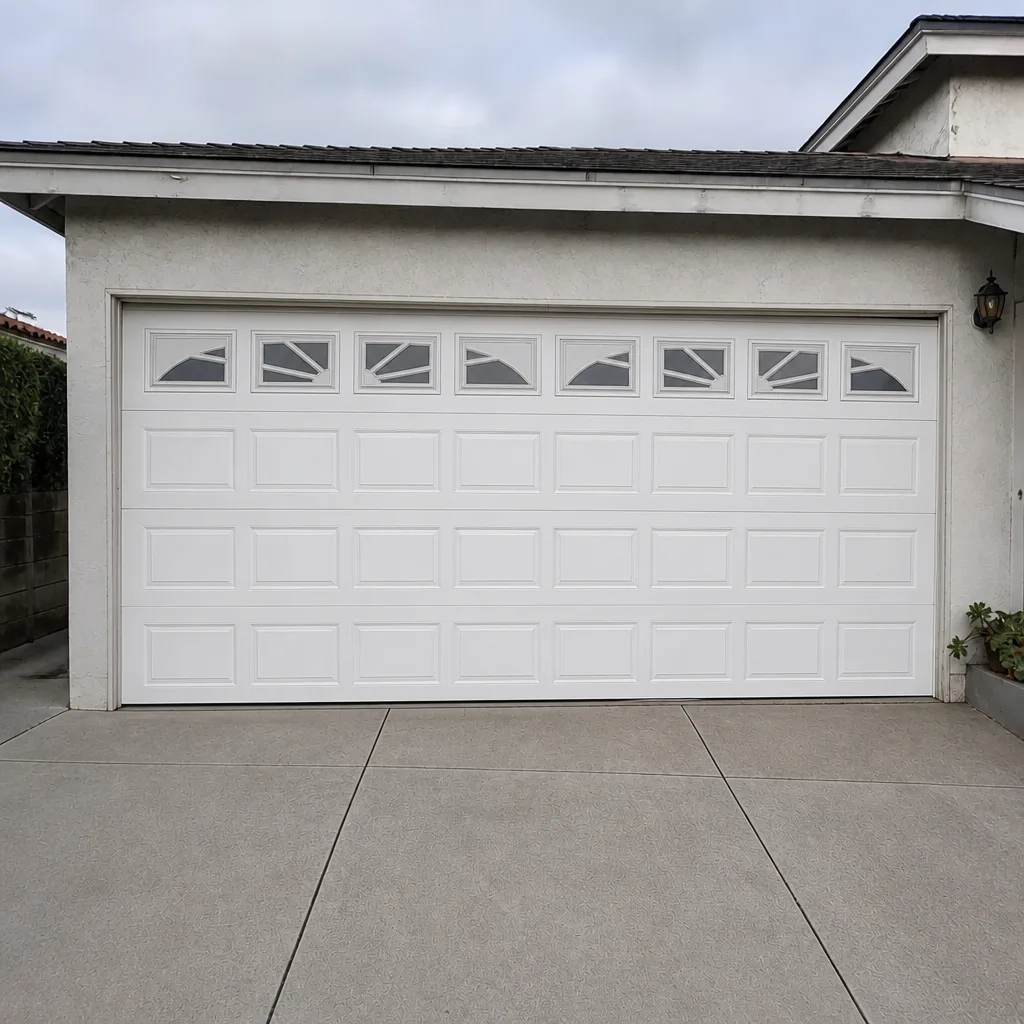 After
When to Call a Professional
Call a professional when the problem involves springs under tension, a door that has come off its tracks, an opener that isn’t responding to any input, or a panel that has been damaged by an impact or attempted forced entry. These situations carry real risk of injury or property damage. If your door is making unusual sounds and you’re not sure what they mean, call before the sound becomes a breakdown. Stonegate Garage Door Repair offers free estimates in Monterey Park, call (844) 972-4229. We answer 24/7. Fast dispatch from 7am to 7pm, Sunday through Friday.
Frequently Asked Questions
If your door is heavy to lift manually, slams shut faster than it used to, or shows visible gaps in the coil of a torsion spring, the springs are nearing the end of their life. A door that jumps when it starts to open is another sign of uneven spring tension. Call (844) 972-4229 for an exact assessment, estimates are free.
Spring replacement in Monterey Park typically depends on spring type and door size, with the written estimate setting the final price before any work begins. Torsion spring replacement usually costs more than extension spring replacement because of the additional safety equipment and labor involved. Call (844) 972-4229 for a written quote on your specific door.
Many opener failures are repairable: stripped gears, broken drive couplings, and misaligned sensors are common fixes. If your opener is older than 15 years or the motor itself has failed, replacement is typically the better long-term value. We’ll diagnose your specific unit and tell you what makes sense for your Monterey Park home.
A door that reverses on its way down is almost always reacting to a safety sensor problem: misalignment, dirty lenses, or a wiring issue. The sensors near the bottom of each track must be aligned with each other and free of obstruction for the door to close normally. If cleaning and aligning them doesn’t solve it, the sensor or logic board may need replacement.
Most panel and opener replacements don’t require permits, but structural retrofits involving the framing around the garage opening may fall under local building requirements. Ask your city’s building department about your specific project before any structural work begins. A standard door or opener swap typically doesn’t need anything beyond a proper installation.
The price is set per job by the written estimate, and we confirm it before any work starts. If the full-system diagnosis reveals a related issue that wasn’t visible during the initial quote, we’ll explain what we found and get your approval before adding anything to the job. You’ll never be surprised by an invoice larger than the number you saw and agreed to. Call (844) 972-4229, free estimates.
The Bottom Line
A garage door in Monterey Park is a system, not a single product. The panels, springs, and opener each have their own maintenance needs, and neglect in one layer eventually shows up as a failure in another. Knowing what era your home was built in tells you what door dimensions to expect. Knowing your spring type tells you what to watch for as it ages. Knowing your opener brand tells you whether to repair or replace. The homeowners who avoid surprise repair bills are the ones who see the door as a mechanical system and treat it that way. One call covers the whole door.
Written by the team at Stonegate Garage Door Repair, serving Monterey Park since 2012.
Call (844) 972-4229 for a free estimate. We answer 24/7. Fast dispatch from 7am to 7pm, Sunday through Friday.